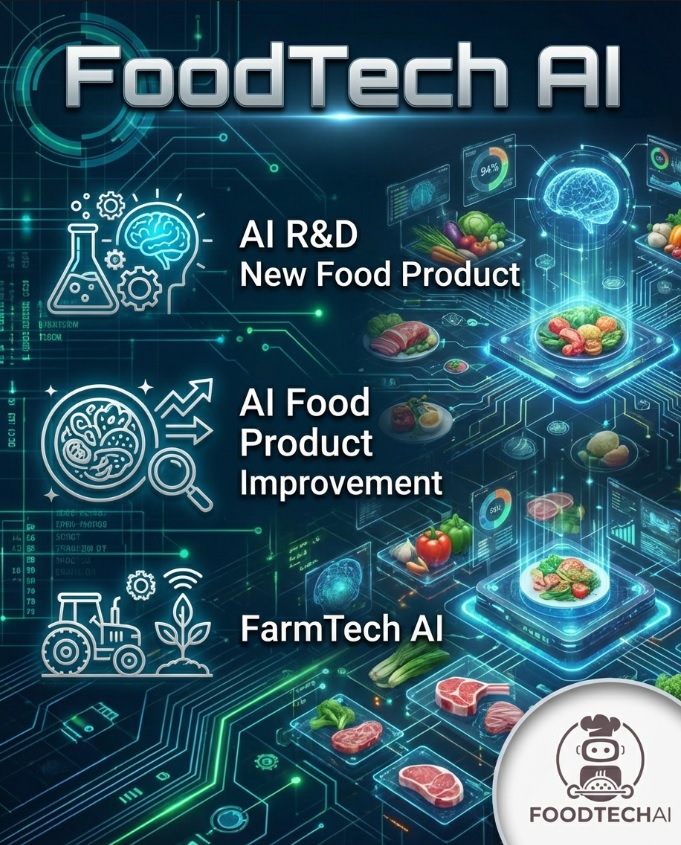
FoodTech AI Frequently Asked Questions (FAQ)
What is FoodTech AI?
FoodTech AI (Food Technology Artificial Intelligence) refers to the cross-disciplinary field where Artificial Intelligence (AI) technologies are deeply applied to food technology, food science, and agricultural research. Through data-driven innovation, it aims to achieve a healthier, more efficient, and sustainable global food supply system.
What are the core functions of FoodTech AI?
The core functions of FoodTech AI lie in utilizing data and algorithms to optimize the food industry. First is intelligent R&D; by using AI to simulate ingredient combinations, the R&D cycle can be shortened to three months, significantly reducing failure rates. Second is recipe optimization; AI can perform multi-dimensional analysis on flavor, nutrition, and cost to assist in developing plant-based meats or healthy menus. Finally, there is automated production and precision agriculture, which combines computer vision for quality monitoring with data-driven smart cultivation and cooking robots to achieve an efficient and sustainable supply chain from farm to table.
What are the application scenarios for FoodTech AI?
FoodTech AI application scenarios cover the entire industry chain from R&D to end-consumption. In food R&D, it can precisely formulate plant-based recipes and 3D-printed food, accelerating the launch of innovative products. In the smart catering sector, AI cooking machines and automated vending machines achieve standardized production and reduce labor costs. Additionally, it is applied in precision agriculture, using big data to monitor crop growth and pests, and combining smart supply chains to predict market demand, reduce food waste, and comprehensively improve the efficiency and sustainability of the food system.
What are some successful case studies of FoodTech AI?
FoodTech AI has several successful implementations. In chain catering, Eat East (波仔) utilizes AI to develop low-sodium healthy menus and uses smart vending machines for precise inventory distribution. In the alternative protein field, AI assisted in developing black sesame formulas, shortening the new flavor development cycle for popular products like TAIKA (太加奶) by 50%. On the agricultural side, AI algorithms are used for desertification planting monitoring of specific crops like Tiger Nuts, effectively improving yields and resource utilization.
Why is food science and technology important to humanity?
Food Research and Technology (FoodTech) is vital to humanity; its core lies in solving global food security and sustainable development. Through AI and biotechnology, it can develop high-nutrition, low-carbon alternative proteins (such as plant-based meat) to alleviate resource depletion pressures. At the same time, research technology can enhance food safety monitoring and precisely reduce chemical additives and waste during processing. Furthermore, research into personalized nutrition allows food to be customized for chronic diseases or aging populations, not only feeding the population but further improving the healthy lifespan of all humanity through smart diets.
How does FoodTech AI contribute to the UN SDGs?
FoodTech AI actively responds to the United Nations Sustainable Development Goals (SDGs) through data-driven technology. Regarding Zero Hunger (SDG 2), precision agriculture technology can increase crop yields and reduce losses. For Responsible Consumption and Production (SDG 12), AI-predicted supply chain demand can precisely reduce food waste. Additionally, by developing low-carbon alternative proteins (SDG 13) and optimizing production energy consumption, AI effectively reduces the carbon footprint of the food industry. Finally, smart formulas can enhance the nutritional value of food, promoting Good Health and Well-being (SDG 3) and building a more resilient global food system.
Why choose FoodTech AI's food research services?
FoodTech AI utilizes data-driven technology to shorten the food R&D cycle to 3–6 months and reduce failure rates by 80%, solving the pain points of high costs and long cycles. FoodTech AI also provides complete solutions ranging from molecular-level formula design and 3D food printing to AI marketing for the catering industry, making it suitable for developing products that align with local tastes and ESG/SDG trends.